
Tối Ưu Thiết Kế Nhà Xưởng Theo Đặc Thù Ngành F&B
Câu 1: Xin ông/bà cho biết những yêu cầu chung của nhà đầu tư nước ngoài, đặc biệt là các nhà đầu tư Trung Quốc, khi xây dựng nhà xưởng tại Việt Nam?
A: Nhà đầu tư nước ngoài, đặc biệt từ Trung Quốc, khi xây dựng nhà xưởng tại Việt Nam thường đặt ra các yêu cầu chính như:
- Hiệu quả chi phí: Tối ưu hóa chi phí xây dựng bằng cách sử dụng vật liệu địa phương nhưng vẫn đảm bảo chất lượng và độ bền.
- Tiến độ nhanh: Yêu cầu tiến độ hoàn thành nhanh để sớm đưa vào vận hành.
- Tiêu chuẩn quốc tế: Tuân thủ nghiêm ngặt các tiêu chuẩn như HACCP, ISO.
- Quy hoạch linh hoạt: Không gian thiết kế cần đáp ứng mở rộng sản xuất trong tương lai.
- Môi trường và pháp lý: Đảm bảo hệ thống xử lý nước thải và chất thải đạt tiêu chuẩn QCVN, QC 06: 2022 về PCCC, và các quy định pháp luật khác của Việt Nam.
Câu 2: Xin ông/bà hãy cho biết yêu cầu của nhà đầu tư theo đặc thù ngành – những điểm khác biệt nổi bật ở ngành F&B?
A: Ngành F&B có những yêu cầu thiết kế riêng biệt:
- Tiêu chuẩn vệ sinh nghiêm ngặt: Yêu cầu vật liệu dễ làm sạch, chống nấm mốc như panel cách nhiệt và sàn phủ PU/epoxy.
- Quy trình sản xuất khép kín: Bố trí luồng di chuyển một chiều từ nguyên liệu đến thành phẩm.
- Kho lạnh: Tích hợp kho lạnh với hệ thống kiểm soát nhiệt độ chặt chẽ.
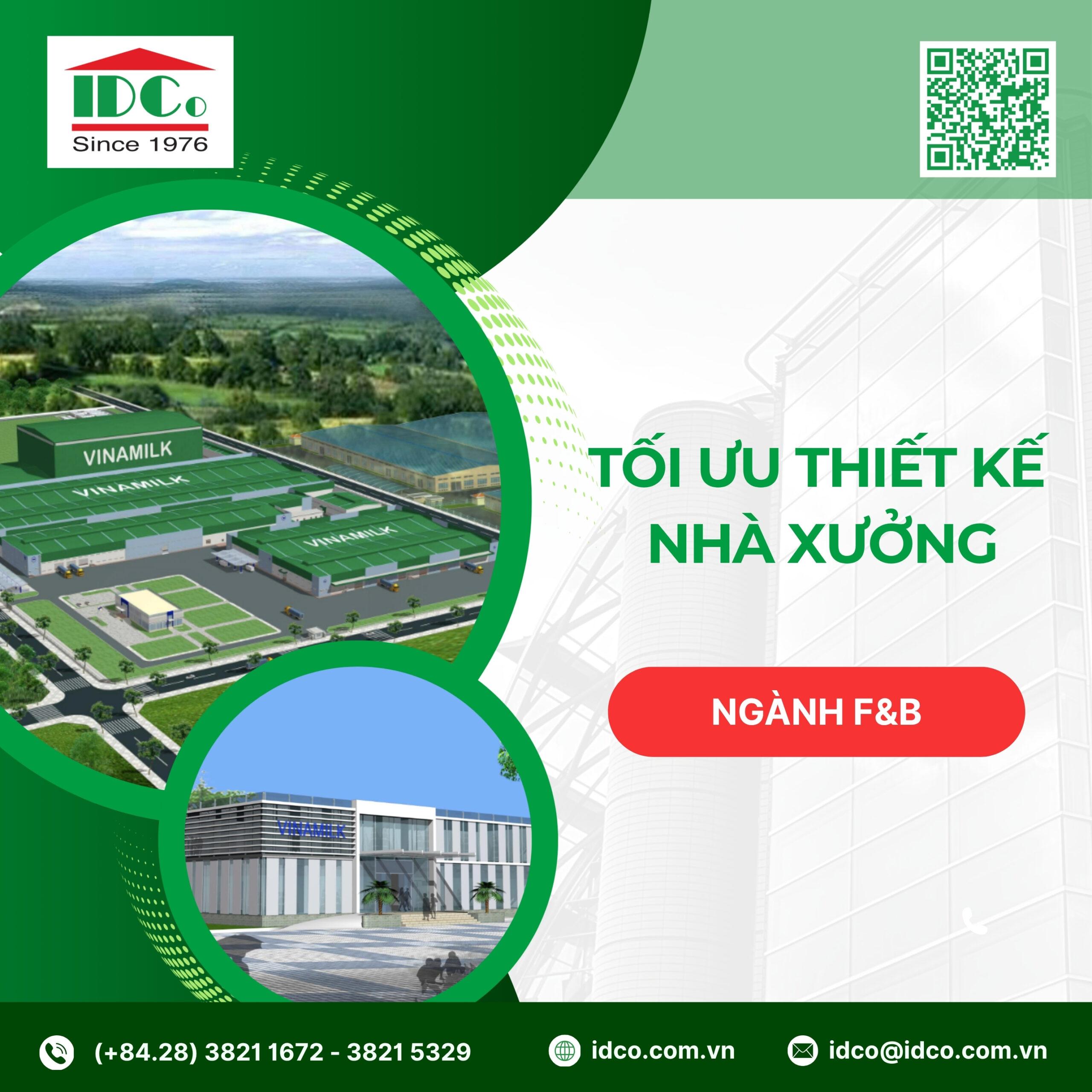
Case Study – Nhà máy sữa Mega Milk:
- Sử dụng panel cách nhiệt cho tường và trần, đảm bảo vệ sinh và cách nhiệt hiệu quả.
- Hệ thống xử lý nước thải đạt tiêu chuẩn QCVN 40:2011/BTNMT, công suất 1,500 m³/ngày đêm.
Câu 3: Theo ông/bà, những điểm khác biệt nổi bật nào nhà đầu tư cần lưu tâm trong thiết kế nhà xưởng ngành F&B?
A:
- Giải pháp bao che: Sử dụng panel cách nhiệt 2 lớp (tôn/inox và lõi PU), kết hợp sàn phủ PU để dễ làm sạch và chịu hóa chất.
- Mái nhà: Tấm lợp cách nhiệt PU giảm nhiệt độ và tiết kiệm năng lượng.
- Tích hợp hệ thống xử lý nước thải và khí thải: Đảm bảo đạt tiêu chuẩn QCVN và an toàn môi trường.
Case Study – Mega Milk:
Kho lạnh được tích hợp đồng bộ với dây chuyền sản xuất, giữ chất lượng sản phẩm tối ưu.
Câu 4: Xin ông/bà hãy đưa ra hướng dẫn cách thiết kế nhà xưởng đáp ứng quy định về xử lý nước thải, chất thải công nghiệp theo tiêu chuẩn môi trường tại Việt Nam?
A:
- Tuân thủ quy định pháp luật: Đảm bảo thiết kế dựa trên Báo cáo ĐTM hoặc Kế hoạch bảo vệ môi trường được phê duyệt. Tuân thủ các quy định trong Luật Bảo vệ Môi trường (2020) và QCVN 40:2011/BTNMT.
- Hệ thống xử lý nước thải: Thu gom tách biệt; quy trình xử lý bằng bể lắng, bể sinh học Aerotank hoặc công nghệ SBR; khử trùng UV hoặc Clo trước khi xả.
Case Study – Mega Milk:
- Công suất xử lý nước thải đạt 1,500 m³/ngày đêm, sử dụng công nghệ xử lý sinh học và hóa lý.
- Hệ thống quản lý chất thải rắn: Phân loại tại nguồn; khu vực lưu trữ kín, chống rò rỉ.
- Kiểm soát khí thải: Sử dụng hệ thống lọc khí Cyclone/HEPA.
- Hạ tầng xanh: Bố trí cây xanh tối thiểu 20% theo QCVN 01:2021/BXD.
Kết luận:
Tuân thủ quy định môi trường và áp dụng các giải pháp xử lý hiện đại giúp nhà đầu tư không chỉ đáp ứng pháp lý mà còn nâng cao hình ảnh doanh nghiệp trong việc phát triển bền vững. Dự án Mega Milk là minh chứng rõ nét cho thiết kế tuân thủ các tiêu chuẩn môi trường nghiêm ngặt tại Việt Nam.
📞 Hãy liên hệ ngay với chúng tôi để được tư vấn chi tiết!
————————————
IDCo | Uy Tín – Chất Lượng – Đúng Tiến Độ
🏢 Trụ sở chính: 146 Nguyễn Công Trứ, Phường Bến Thành, TP.HCM
☎️ Hotline: (+84.28) 3821 1672 – 3821 5329
🌐 Website: www.idco.com.vn
📩 Email: idco@idco.com.vn
#IDCo #TuVanPhapLy #GiayPhepXayDung #LegalBottleneck #FDIProjects #PhapLyQuyHoachDacThu #XayDungAnToan #LegalSupport #IDCoLegalTeam #DauTuHieuQua
OPTIMIZING FACTORY DESIGN FOR THE F&B INDUSTRY
Question 1: Could you please share the general requirements of foreign investors, particularly Chinese investors, when building factories in Vietnam?
Answer:
Foreign investors, especially from China, often emphasize the following key requirements when constructing factories in Vietnam:
- Cost efficiency: Optimize construction costs by using local materials while ensuring durability and quality.
- Fast timeline: Require accelerated project schedules to start operations as early as possible.
- International standards compliance: Strict adherence to standards such as HACCP and ISO.
- Flexible planning: Layouts should allow future expansion of production capacity.
- Environmental & legal compliance: Wastewater and solid waste treatment systems must meet Vietnamese standards such as QCVN, QC 06:2022 (fire safety), and other relevant legal regulations.
Question 2: What are the specific requirements of investors according to the characteristics of the F&B sector – what makes it different from other industries?
Answer:
The F&B industry has distinctive design requirements:
- Strict hygiene standards: Materials must be easy to clean and mold-resistant, such as insulated panels and PU/epoxy-coated floors.
- Closed-loop production process: Workflow must follow a one-way direction, from raw materials to finished goods.
- Cold storage integration: Cold rooms with strict temperature control systems are essential.
Case Study – Mega Milk Dairy Plant:
- Insulated panels were applied for walls and ceilings to ensure hygiene and energy efficiency.
- Wastewater treatment system complied with QCVN 40:2011/BTNMT, with a capacity of 1,500 m³/day.
Question 3: From your perspective, what critical differences should investors pay attention to when designing F&B factories?
Answer:
- Building envelope solutions: Use double-layer insulated panels (steel/stainless steel with PU core), combined with PU-coated flooring for chemical resistance and easy cleaning.
- Roofing system: PU-insulated roofing sheets help reduce temperature and save energy.
- Integrated waste & emission treatment: Ensure compliance with QCVN standards and environmental safety.
Case Study – Mega Milk:
- Cold storage was seamlessly integrated with the production line to preserve product quality.
Question 4: Could you provide guidance on how to design factories that comply with wastewater and industrial waste treatment regulations under Vietnam’s environmental standards?
Answer:
- Legal compliance: Designs must be based on approved Environmental Impact Assessment (EIA) reports or Environmental Protection Plans. Compliance with the Law on Environmental Protection (2020) and QCVN 40:2011/BTNMT is mandatory.
- Wastewater treatment system: Separate collection systems; treatment by sedimentation tanks, biological processes (Aerotank or SBR), followed by UV or Chlorine disinfection before discharge.
- Solid waste management: Segregation at source; enclosed storage areas to prevent leakage.
- Air emission control: Cyclone/HEPA filtration systems for exhaust air.
- Green infrastructure: At least 20% green area as per QCVN 01:2021/BXD.
Case Study – Mega Milk:
- Wastewater treatment capacity of 1,500 m³/day using combined biological and physicochemical technologies.
- Solid waste managed with on-site segregation and controlled storage.
- Green coverage ensured compliance and enhanced sustainability.
Conclusion:
Strict compliance with environmental regulations and the application of modern treatment solutions not only help investors meet legal requirements but also strengthen corporate reputation in sustainable development. The Mega Milk project stands as a clear example of a factory design aligned with Vietnam’s rigorous environmental standards.
📞 Contact us today for detailed consultation!
IDCo | Prestige – Quality – On-time Delivery
🏢 Head Office: 146 Nguyen Cong Tru, Ben Thanh Ward, Ho Chi Minh City
☎️ Hotline: (+84.28) 3821 1672 – 3821 5329
🌐 Website: www.idco.com.vn
📩 Email: idco@idco.com.vn
#IDCo #LegalConsulting #ConstructionPermit #LegalBottleneck #FDIProjects #SpecializedPlanning #SafeConstruction #LegalSupport #EfficientInvestment